
Commercial Solid Epoxy Flooring in Magnolia for high-traffic spaces with heavy equipment and chemical exposure
Floors That Handle Real Workshop Use
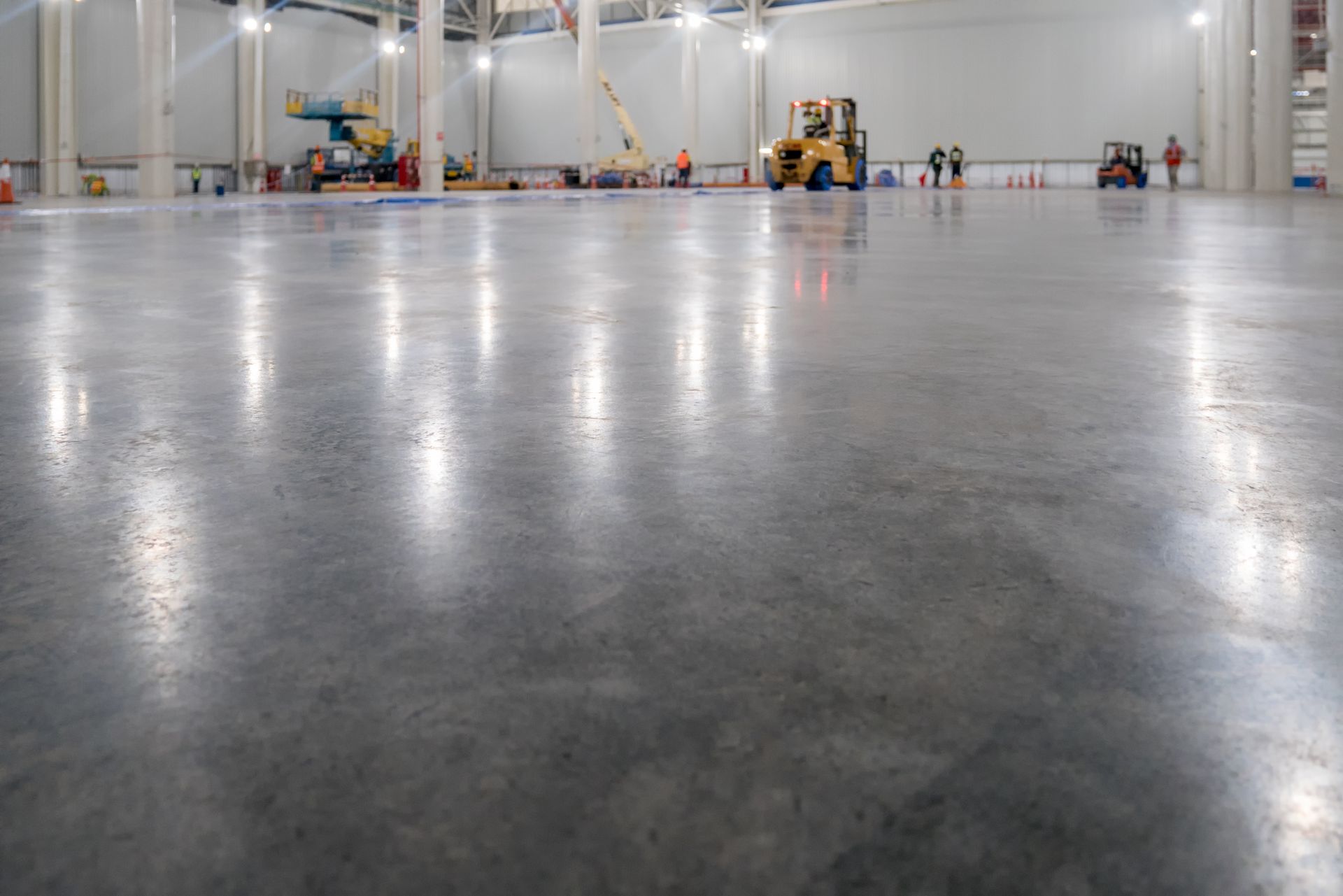
Top rank epoxy installs commercial solid epoxy flooring systems that resist impact from dropped tools, abrasion from rolling equipment, and spills from chemicals or fluids without breaking down. The seamless finish across the entire surface eliminates joints where contaminants can settle, and the consistent color throughout the material means wear patterns remain less visible even after years of use. Facilities in Magnolia that run forklifts, house manufacturing equipment, or store industrial materials rely on this type of flooring because the surface holds up under conditions that would crack or stain standard concrete.
The solid epoxy system creates a thick, uniform layer over prepared concrete, bonding directly to the substrate and forming a single continuous surface. Custom color options allow you to match the floor to corporate branding or designate specific work zones with different hues, and the smooth finish stays consistent from wall to wall without seams or transitions that collect debris.
Schedule a facility assessment to evaluate substrate conditions and determine color specifications for your space.
How Does Floor Maintenance Work in Cypress?
What Proper Commercial Epoxy Installation Requires
Commercial-grade solid epoxy flooring requires thorough concrete surface preparation before application, including grinding or shot blasting to remove contaminants and open the pores of the substrate. The epoxy is then applied in measured thickness to create a rigid, impact-resistant layer that cures into a hard surface capable of supporting heavy machinery and constant foot traffic without flexing or delaminating.
Once cured, you notice that spilled oils, solvents, and cleaning agents no longer penetrate the floor, and the smooth finish wipes clean without leaving residue in surface pores. The uniform gloss reflects overhead lighting more effectively, and the absence of cracks or joints means you no longer deal with dust generation or debris accumulation in floor seams.
The system includes a primer coat for adhesion, the solid epoxy body layer for structural strength, and a topcoat for abrasion resistance, though certain high-impact environments may require additional thickness or aggregate additives depending on the specific loading conditions your facility experiences daily.
Answers to Frequent Service Questions
Businesses considering solid epoxy flooring for warehouses, workshops, or manufacturing spaces often want to know about preparation steps, cure times, and long-term performance under specific operational demands.
What happens to the existing concrete before epoxy application?
The concrete surface is mechanically profiled using grinders or blasters to remove any coatings, oils, or laitance, creating a rough texture that allows the epoxy primer to bond chemically and mechanically to the substrate.
Why does color customization matter in a commercial facility?
Custom colors allow you to create visual cues for safety zones, traffic lanes, or work areas, and certain colors hide tire marks or scuffs better than others depending on the type of equipment and materials your operation handles daily.
What conditions in Magnolia affect the curing process?
High humidity and temperature fluctuations common in the area can extend cure times or affect the final hardness of the epoxy, so installation timing and climate control during application directly impact how quickly the floor reaches full strength.
How does solid epoxy perform differently than thinner coating systems?
Solid epoxy is applied at a much greater thickness than standard coatings, typically between one-eighth and one-quarter inch, which provides impact resistance that prevents cracking when heavy objects drop and abrasion resistance that withstands constant equipment traffic without wearing through to the concrete.
How long does a properly installed solid epoxy floor last in an industrial setting?
When installed over properly prepared concrete and maintained with routine cleaning, solid epoxy flooring can perform for ten to twenty years even in heavy-use environments, far outlasting tile, coating systems, or untreated concrete that require frequent patching or replacement.
Top rank epoxy works with facility managers to coordinate installation during off-hours or scheduled downtime to minimize operational disruption. Arrange a project consultation to review floor loading requirements and establish a timeline that fits your production schedule.