
Industrial Polished Concrete in Magnolia for warehouses and production facilities with heavy equipment and constant loading
Floors Built for Forklift and Machinery Traffic
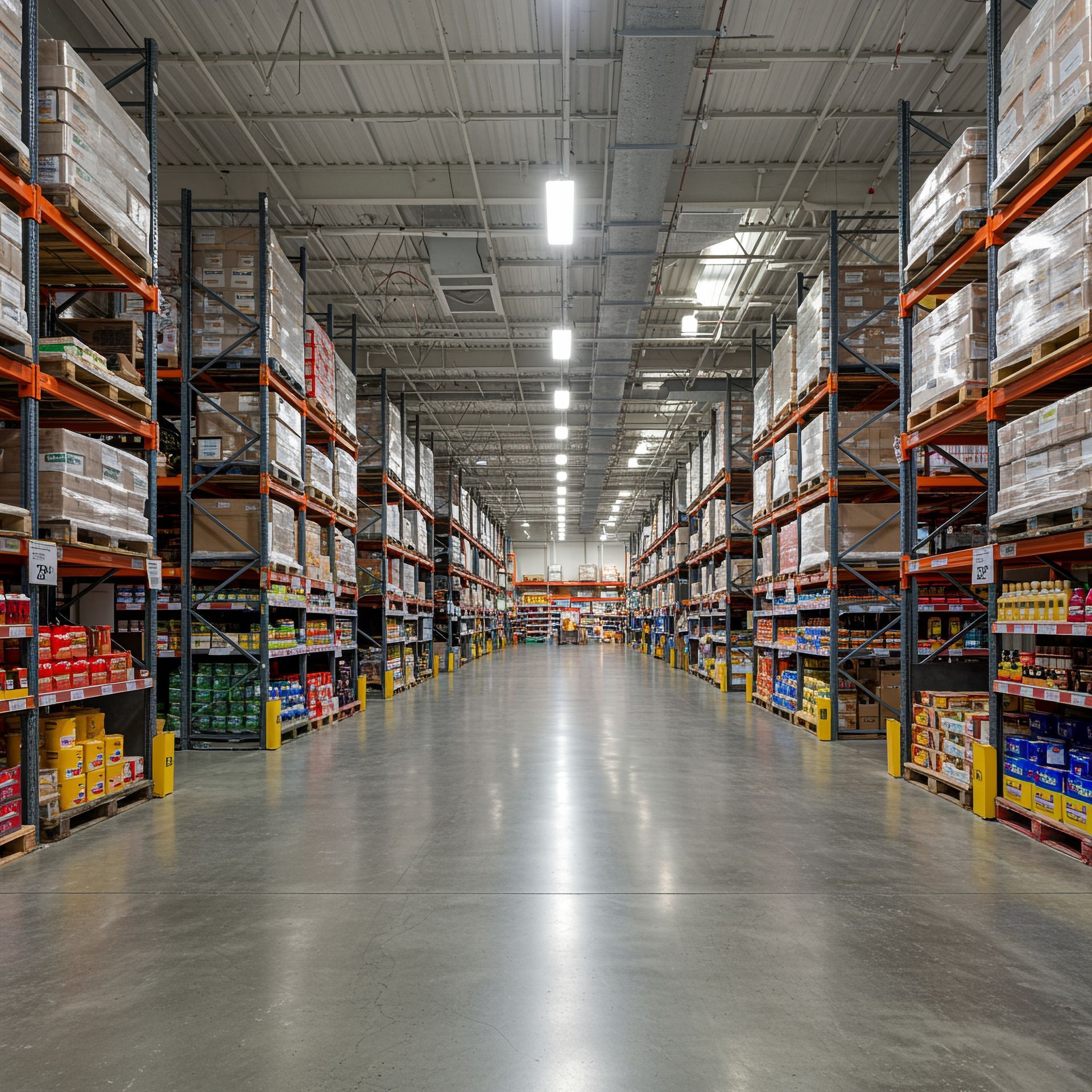
Forklifts, pallet jacks, and manufacturing machinery generate point loads and abrasion that break down untreated concrete, creating dust and surface degradation that contaminates inventory and requires constant sweeping. Industrial polished concrete densifies the concrete surface through mechanical grinding and chemical hardening, creating a wear-resistant layer that withstands decades of heavy equipment traffic without dusting or cracking under load. Top rank epoxy processes concrete floors in Magnolia industrial facilities to eliminate the need for coatings that peel under tire traffic and waxes that require frequent reapplication and create slip hazards.
The polishing process begins with coarse-grit diamonds that flatten high spots and remove damaged surface concrete, followed by progressively finer grits that refine the surface and expose the aggregate structure within the concrete. A liquid densifier penetrates the concrete and reacts chemically to harden the calcium within the matrix, and final polishing steps create a smooth, dense surface that resists abrasion and prevents concrete particles from breaking loose under mechanical stress.
Arrange an on-site evaluation to assess concrete condition and determine the appropriate polish level for your equipment and traffic patterns.
How Does Floor Maintenance Work in Cypress?

How Polished Concrete Addresses Dust and Durability
The densification process fills the pores in the concrete surface and hardens the top layer, preventing the concrete from shedding dust particles as equipment and foot traffic abrade the floor. The polished finish creates a tight surface that resists penetration by oils, coolants, and other fluids common in industrial settings, and the hardened layer distributes point loads more effectively than untreated concrete, reducing the formation of surface cracks and spalls.
Once complete, you no longer sweep concrete dust from inventory shelves or clean residue from stored materials, and the floor surface remains intact under forklift tires and equipment wheels without developing the ruts or surface damage that appear in softer coatings. The reflective finish improves visibility in the facility by bouncing overhead lighting back into the space, reducing shadows under racking and around machinery.
The system does not require ongoing waxing, stripping, or recoating, which eliminates the labor and material costs associated with maintaining coated floors, though the surface benefits from periodic cleaning with pH-neutral solutions to remove accumulated oils and prevent them from dulling the polished finish over time.
Common Questions About This Service
Facility managers evaluating polished concrete for warehouses and manufacturing spaces typically ask about performance under specific equipment types, maintenance requirements, and how the system compares to epoxy coatings or untreated slabs.
What makes polished concrete suitable for forklift traffic?
The densification process hardens the concrete surface to a level that resists the abrasive action of forklift tires and the point loads created by the equipment's weight, preventing the surface from wearing away or cracking under repeated passes along the same paths.
How does the dust-resistant surface work?
Polishing and densifying seal the pores in the concrete and harden the top layer, so abrasion from traffic no longer breaks particles loose, eliminating the fine dust that settles on inventory and equipment in facilities with untreated concrete floors.
Why does polished concrete cost less to maintain than coatings?
The polished surface is the concrete itself, not a separate coating layer, so there is nothing to peel, crack, or wear through, and routine cleaning with basic equipment is all that's needed to keep the floor performing without scheduled recoating or patching.
What local conditions in Magnolia affect concrete polishing?
Humidity can impact the curing and performance of chemical densifiers, so application timing and ventilation are adjusted based on seasonal conditions to allow the densifier to penetrate and react properly within the concrete matrix.
How long does an industrial polished concrete floor last?
When properly maintained with routine cleaning, a polished concrete floor can perform for twenty years or more in heavy industrial environments, far outlasting coatings or untreated concrete that require frequent repairs or replacement due to surface degradation.
Top rank epoxy coordinates polishing projects to minimize disruption to production schedules and material flow. Request a project proposal to review preparation steps, timeline, and post-installation cleaning protocols for your facility.